

| Category | Pneumothorax or Collapsed Lung |
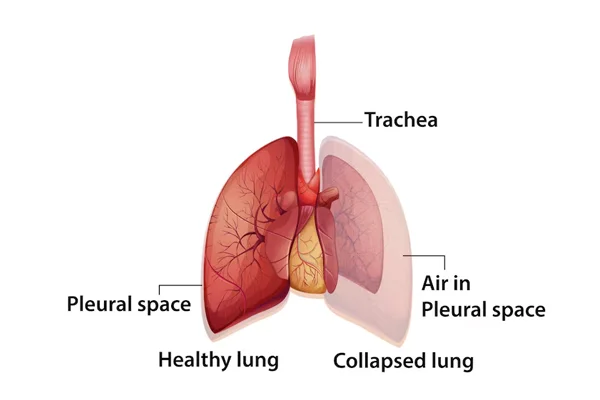
A pneumothorax, commonly known as a collapsed lung, occurs when air enters the pleural space between the lung and chest wall. The trapped air can put pressure on the lung and cause part or all of the lung to collapse.
A pneumothorax can range from a small collection of air that resolves with monitoring to a serious condition requiring immediate treatment. If you are looking for pneumothorax treatment in Sarita Vihar, Dr. Saraansh Bansal provides specialist evaluation and personalised treatment guidance based on the size of the pneumothorax, symptoms, underlying cause, and overall health.
Normally, the lungs remain expanded within the chest because of pressure relationships in the pleural space. When air enters this space, the pressure can cause the affected lung to partially or completely collapse.
A pneumothorax may occur spontaneously or as a result of an underlying lung condition, injury, or medical procedure.
In some situations, air continues to enter the pleural space and causes increasing pressure. This is called a tension pneumothorax and is a medical emergency because it can interfere with breathing and circulation.
Different types of pneumothorax can occur depending on the cause and circumstances.
A spontaneous pneumothorax occurs without an obvious external injury. It may occur in people without previously diagnosed lung disease or in people with an underlying lung condition.
This type develops in people who already have an underlying lung condition, such as COPD, emphysema, asthma, tuberculosis, cystic fibrosis, or other chronic lung diseases.
A traumatic pneumothorax can occur following a chest injury, such as a road accident, fall, or penetrating chest trauma.
This can occur as a complication of certain medical procedures involving the chest or lungs.
Symptoms depend on how much the lung has collapsed and whether there is an underlying lung condition. Common symptoms include:
Severe breathlessness, rapidly worsening chest pain, bluish lips or skin, dizziness, fainting, or significant weakness may indicate a serious pneumothorax and require urgent emergency medical attention.
Pneumothorax can develop for several reasons. Possible causes include:
Smoking can increase the risk of spontaneous pneumothorax and recurrence.
Accurate diagnosis is an important part of pneumothorax treatment in Sarita Vihar. A doctor may assess symptoms, breathing, oxygen levels, medical history, and physical examination findings.
A chest X-ray is commonly used to identify air in the pleural space and determine the extent of lung collapse. In selected cases, a CT scan may provide more detailed information about the lungs and possible underlying causes.
The urgency of treatment depends on the patient's symptoms, clinical condition, and size and type of pneumothorax.
Treatment depends on the size of the pneumothorax, symptoms, cause, and whether the patient has underlying lung disease.
A small pneumothorax causing minimal symptoms may sometimes be managed with observation and monitoring. The body can gradually absorb the trapped air, allowing the lung to re-expand.
Follow-up imaging may be required to confirm that the pneumothorax is resolving.
Supplemental oxygen may be used in selected patients under medical supervision. It can support oxygen levels and may assist the body's absorption of pleural air in appropriate situations.
In some cases, a healthcare professional may remove the trapped air using a needle or catheter. This can allow the lung to re-expand without requiring a larger chest tube in selected patients.
When the pneumothorax is larger, symptomatic, or not resolving appropriately, a chest tube may be placed into the pleural space to remove air and allow the lung to expand.
The tube may remain in place until the air leak has stopped and imaging confirms satisfactory lung re-expansion.
Surgery may be considered for recurrent pneumothorax, persistent air leakage, or certain high-risk situations. Surgical treatment may involve repairing the source of the air leak and procedures designed to reduce the chance of recurrence.
The choice of procedure depends on the cause, recurrence history, lung condition, and overall health.
A tension pneumothorax occurs when air enters the pleural space under pressure and cannot escape. As pressure increases, it can compress the affected lung and interfere with the function of the heart and major blood vessels.
Symptoms may include severe breathlessness, chest pain, rapid heart rate, low blood pressure, and deteriorating consciousness.
Tension pneumothorax is a medical emergency and requires immediate treatment. Emergency decompression followed by appropriate chest drainage may be necessary.
Recovery depends on the size and cause of the pneumothorax and the treatment required. Patients treated with observation may recover differently from those requiring chest tube drainage or surgery.
Follow-up imaging is often used to confirm that the lung has fully re-expanded. Patients should follow medical advice regarding physical activity, air travel, smoking, and other activities until they have recovered.
Those with an underlying lung disease may require additional treatment to reduce the risk of recurrence.
Yes. A pneumothorax can recur, particularly in patients who have previously experienced one. The risk can be influenced by the underlying lung condition, smoking, size of the initial pneumothorax, and other factors.
Patients with repeated episodes may require additional evaluation and, in selected cases, a surgical procedure to reduce the risk of future recurrence.
Pneumothorax requires careful assessment because the appropriate treatment can vary significantly between patients. Dr. Saraansh Bansal focuses on evaluating the cause, severity, symptoms, and underlying lung condition before recommending an appropriate management approach.
For patients seeking pneumothorax treatment in Sarita Vihar, specialist consultation can help with diagnosis, treatment planning, follow-up, and assessment of recurrence risk.
A collapsed lung can develop suddenly and may cause significant breathing difficulty. Prompt evaluation is particularly important when chest pain or breathlessness develops suddenly.
Dr. Saraansh Bansal provides specialist consultation and personalised treatment guidance for pneumothorax in Sarita Vihar. Treatment may range from careful observation to drainage or surgical management depending on the individual clinical situation.
If you experience sudden severe chest pain or difficulty breathing, seek emergency medical care immediately rather than waiting for a routine consultation.
Pneumothorax is a condition in which air enters the pleural space and causes part or all of the lung to collapse.
Sudden chest pain and shortness of breath are common symptoms. Rapid breathing, chest tightness, dry cough, and increased heart rate may also occur.
Some small pneumothoraces may resolve naturally as the body absorbs the trapped air. Medical assessment and appropriate follow-up are still important.
No. Treatment depends on the size, symptoms, cause, recurrence, and clinical condition. Some cases can be managed with observation or drainage, while selected recurrent or persistent cases may require surgery.
A pneumothorax can result from spontaneous air leakage, underlying lung disease, chest injury, or certain medical procedures.
Yes. Recurrence is possible, particularly after a previous spontaneous pneumothorax. Additional treatment may be considered for patients with recurrent episodes.
Sudden severe breathlessness, worsening chest pain, fainting, bluish skin, or signs of circulatory problems can indicate a serious pneumothorax requiring immediate emergency care.
Dr. Saraansh Bansal provides specialist consultation and personalised pneumothorax treatment guidance in Sarita Vihar.


